THIS WEBSITE IS UNDER CONSTRUCTION.
All information should be considered a draft and links may not work as expected!
THIS WEBSITE IS UNDER CONSTRUCTION.
All information should be considered a draft and links may not work as expected!
THIS WEBSITE IS UNDER CONSTRUCTION.
All information should be considered a draft and links may not work as expected!
Find out more about Unite the Union and how we are organised in NatWest Group and beyond.
Unite the Union is the U.K.’s second largest trade union. We have over 1.2 million members across 19 industrial sectors in the public and private sectors in every region of the U.K., Ireland and Gibraltar.
Unite the Union was formed in 2007 by the merging of two previous unions, Amicus and the Transport and General Workers’ Union. Our General Secretary is Sharon Graham, Unite’s first female General Secretary.
You’ll probably have seen Unite’s motto fighting for jobs, pay and conditions. Think of this as our mission statement. As a collective, we organise around improving these vital areas for the benefit of workers everywhere.
Unite represents workers across 19 different industrial sectors. As Unite members in NatWest Group, we’re part of the Finance and Legal sector alongside members from banking, insurance, finance, and legal employers.
Unite the Union is the recognised trade union for workers in NatWest Group throughout Great Britain, The Channel Islands, The Isle of Man and Gibraltar. We represent c. 35,000 bank workers at A-C grade . Recognition means that we have a formal recognition agreement with NatWest Group and negotiate on things like pay and conditions through a process called collective bargaining.
Members are at the heart of everything we do. Unite is a lay-member led organisation. Unlike businesses, decisions do not come from the top, instead, ordinary members have a direct say and drive our decisions, leadership and direction.
Reps are elected by Unite members in NatWest Group. Like you, they are employees of the bank and are not paid by or employed by Unite. This means they understand the bank’s culture, policies and structure. Our reps receive in-depth training and earn professional qualifications.
Branches bring together groups of members in a specific workplace or local area. Each branch has a number of officers responsible for the administration and running of the branch who can be either a rep in that area or a lay member. Branches hold meetings to update members on campaigns and to hear members’ issues and concerns. Many of our national campaigns start with an issue raised in a local branch. Each member is automatically allocated to their local branch and has a standing invitation to their branch meetings. They are a great way to meet other members, get to know your local reps and hear what Unite is doing in NatWest Group and beyond. Meetings are scheduled at least quarterly, with some branches meeting more often.
The National Company Committee (NCC) is the strategic committee of Unite at NatWest. Consisting of elected workplace reps from each of the regions we cover in NatWest, the NCC organises recruitment and campaigns nationally, leads on negotiations and consultations with the bank, and supports regional campaigns and initiatives.
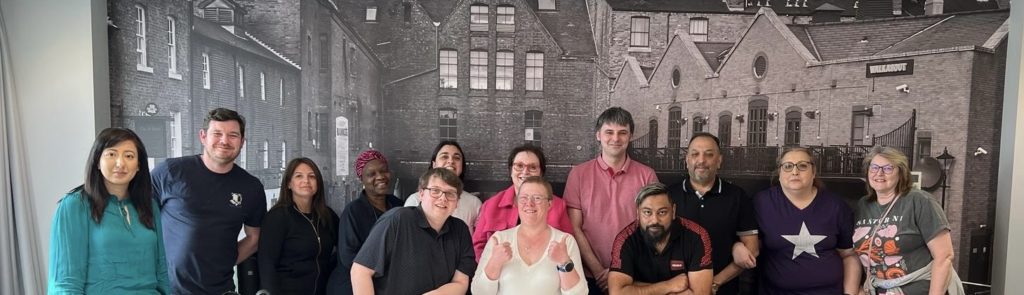
Unite is divided into 12 regions based around the regions and countries where our members live and work. Each region convenes a Regional Industrial Sector Committee (RISC). Reps from workplaces in the finance and legal sector are elected to these committees which meet quarterly to debate sector-specific issues, pass motions and share knowledge.
A number of reps from each RISC are elected to the National Industrial Sector Committee (NISC). The committee makes decisions on the national sector strategy and meets quarterly to debate sector-specific issues arising from the regions which have a potential national impact. Motions can be submitted to the NISC from any RISC.
As part of our commitment to equality of representation and opportunity, there are specific regional and national committees for women members; BAEM members; disabled members; and LGBTQ+ members. Each region also has a young members’ committee and a retired members’ committee. Our rules also state that all committees must have ‘a gender and ethnic balance of elected representatives at least reflecting the proportion of the Black and Asian ethnic minority and women membership which they represent.’
Each Unite region has its own regional committee consisting of reps from each RISC, the region’s equalities committees and Executive Council members representing that region. The committees meet quarterly to discuss pan-sector issues that affect the region, to agree strategic decisions and to support campaigns, industrial action and recruitment in the region.
The Executive Committee (EC) is the highest committee in Unite. Members are elected by a ballot of all Unite members to represent either their region, their industrial sector or an equalities strand. The EC is the ultimate decision-making body of the union. Unite at NatWest has three reps currently serving on the EC: Marina ‘Min’ Gunn (Finance and Legal sectoral seat); Julie ‘Jules’ Cowin (Scottish regional seat); and Faith Coker-Jarra (Women’s seat).