THIS WEBSITE IS UNDER CONSTRUCTION.
All information should be considered a draft and links may not work as expected!
THIS WEBSITE IS UNDER CONSTRUCTION.
All information should be considered a draft and links may not work as expected!
THIS WEBSITE IS UNDER CONSTRUCTION.
All information should be considered a draft and links may not work as expected!
Our Campaigns
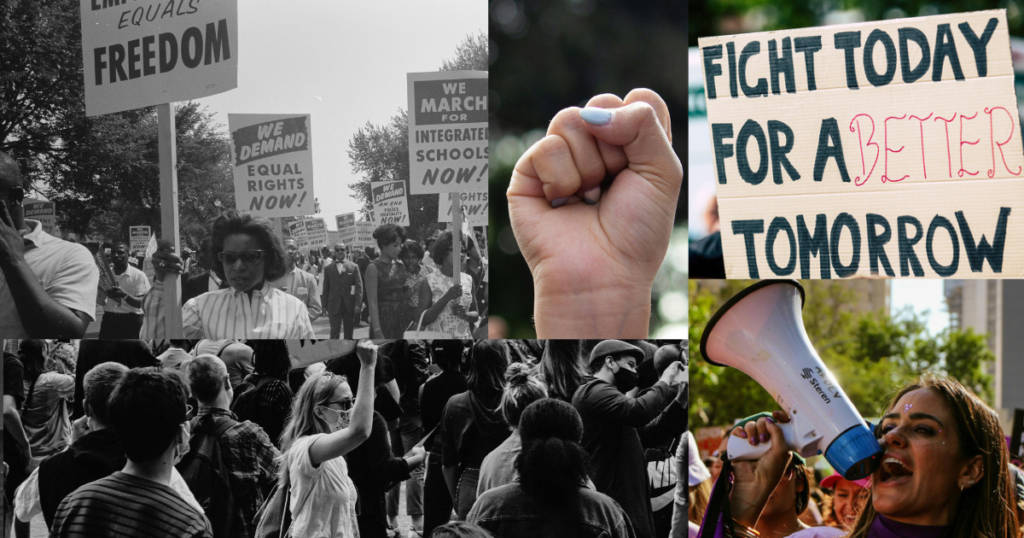
Unite the union is a campaigning and active union. A campaign is a group of actions that are taken around a single issue or set of connected issues. Campaigns seek to use pressure to secure a change, agreement or intervention from an employer or government to address the issue and improve conditions for workers.
A campaign’s issue can impact every worker in the bank or only a small group of workers in a single team, department or local area. The actions taken are carefully planned and are designed to achieve specific and measurable goals. Actions are taken together by our members in what we call ‘collective actions.’
Our campaign collective actions are focussed around three key elements:
Providing information and resources explaining what the issue is, why it matters, how it impacts you and other workers, and what can be done about it. For example, in a pay campaign the educational arm might cover what inflation and real terms pay cuts are and why they matter.
This element builds on the education work and drives members to take action. We might highlight the risks of a change proposed by the bank, demonstrate the threat that issue poses to terms and conditions or outline the employer’s responses to date. In a pay campaign where the employer has made a low pay offer, we might discuss the CEO’s latest pay rise or a large shareholder dividend.
Meetings, focus groups, petitions, solidarity rallies, ballots, surveys, statements, industrial action ballots, recruitment drives and many more actions organise ordinary members around the issue and make it visible to the employer.
Through these interlinked approaches and effective collective actions, the union’s strength grows which in turn gives us leverage. By organising members and using our leverage effectively, we address the power imbalance between the bank and its workers, our members. This is how we win on the issues important to you and bring the Unite motto to life – we fight together to protect and improve your jobs, pay and conditions.
Being a member of a trade union is not a spectator sport. Each and every issue we campaign on comes directly from members. Equally, every win relies on members coming together and organising around a campaign to build collective strength.
Keep reading to learn about our active campaigns or explore or archive of previous campaigns since 2018.
Text about a second campaign will be entered here. This is a placeholder for descriptive content. If you are reading this there is nothing to see here. Come back later and there will be real content to see.
Unite members in NatWest’s Mentor arm organised around a TUPE transfer to EPG Group which threatened long-held terms and conditions including enhanced redundancy pay. The Unite campaign secured significant victories and protected workers’ enhanced terms.
Pay 2026 was the first set of pay negotiations since NatWest returned to fully private ownership. Members would reject two consecutive pay offers from the bank, members would grow in confidence and NatWest would learn that business as usual pay offers will not longer cut it for Unite members.
Negotiations for Pay 2025 were the first to take place under NatWest’s new approach to fair pay and reward. This would be the first year where workers did not receive an end of year rating and pay was not solely linked to performance.
In 2024, the senior leadership team of NatWest’s Financial Crime Hub announced a doubling of office attendance expectations. Unite launched a campaign to push back against these changes securing multiple delays and many concessions from leaders.
For our campaign for Pay 2024, Unite negotiators were determined to build on the wins of 2023 and prevent a return to the bank’s previous business as usual pay rises. With costs still high and profits soaring, the bank’s argument was that the cost of living crisis was over.
The campaign for Pay 2023 gained huge levels of support from members angered by years of low-ball pay offers from NatWest and divisive approach to protecting workers against the rising cost of living. The campaign would result in the largest settlement we’d negotiated to date and some significant wins we would build upon in the following years.
For Pay 2022 we pressed the bank for a substantial pay rise for all. NatWest took a hard line and denied that the cost of living was heading to a crisis point. Within months, however, Unite would be campaigning for cost of living pay rises and inflation would peak at a 41 year high.
The campaign for Pay 2021 took place after a two year deal had covered the first year of the COVID-19 pandemic. The bank took a robust stance that inflation and cost of living were not a concern or obligation for any employer. Unite took a very different view and gained significant concessions.
In NatWest Group, unpaid overtime has been endemic for years. Unite has maintained a strong position that all hours of work, even those that the bank has a culture of not recognising as work, should be paid.
For the 2019 pay negotiations, Unite launched a Fair Pay for All pay claim. In the resulting negotiations, the bank offered a two year pay deal and continued to argue that their approach to pay was well liked by workers. The Unite pay survey found the opposite.
NatWest Group has closed literally thousands of retail branches in communities up and down the country. As the bank returned to profit after the 2008 financial crisis, rather than pause or slow the pace of closures, the bank accelerated it. Unite the Union has been at the forefront of the fight to protect jobs and community access to cash. Click through to read up on our key branch closure campaigns and learn about the scale of the closures.
The Pay 2018 campaign was fought at a unique time for NatWest Group. Then known as RBS Group, the bank had been left on the brink of collapse in the fallout of the 2008 global financial crisis. In the years that followed, the organisation reported astronomical losses well into the billions of pounds. The organisation had been bailed out by the UK government in the immediate aftermath of the crisis and the tax payer remained the majority owner and shareholder.