THIS WEBSITE IS UNDER CONSTRUCTION.
All information should be considered a draft and links may not work as expected!
THIS WEBSITE IS UNDER CONSTRUCTION.
All information should be considered a draft and links may not work as expected!
THIS WEBSITE IS UNDER CONSTRUCTION.
All information should be considered a draft and links may not work as expected!

Resources: industrial action guide
Industrial action is an escalation in a dispute between an employer and a trade union. The most high profile form of industrial action is strike action, where workers ‘withdraw their labour’ by refusing to work. There are, however, many other forms of industrial action short of strike action. While less common, employers can take industrial action against the workforce. A common form might be locking workers out of a workplace.
Here you’ll find the Unite at NatWest guide on everything you need to know about industrial action, including how it works, how the law protects you from detriment and what your rights are.
Unite is a democratic trade union. All key decisions are decided by members, including whether or not to take industrial action. An industrial action ballot is a formal ballot of members asking whether they wish to take industrial action or not. The question on the ballot will state whether the proposed action is ‘up to and including strike action’ or ‘action short of industrial action.’
An indicative ballot, sometimes called a consultative ballot, is a ballot of Unite members to test whether they would consider taking industrial action on an issue. It is not a formal industrial action ballot, has no legal standing, and cannot be used as a basis to take industrial action – that requires a formal industrial action ballot.
We use these ballots to take temperature checks on an issue and in pay ballots for members voting to reject the pay offer, we run an indicative ballot. They show us how willing members are to take action to win on an issue. If support is sufficient and negotiations do not reach an acceptable solution, we would then consider launching a formal industrial action ballot.
This is what most people picture when they think about industrial action and what usual appears in the news. It is the biggest escalation the Unite members can take in a dispute with an employer. In a nutshell, it is a collective action where Unite members withdraw their labour on the designated strike day(s). Many striking workers will attend a picket line, solidarity rally or digital picket line.
The purpose of strike action is to impact an employer’s output or productivity, to have a knock-on impact on customer, clients or suppliers, and to increase publicity of the issue – all of which is intended to force the employer to make a change or return to the negotiating table with Unite.
This is the official face of a strike and generally sees workers gathered in front of a workplace entrance or exit. Government guidance suggests limiting an official picket line to no more than six individuals at any one time. Unite strikes generally attract far greater support than this, so we organise separate solidarity rallies.
Government guidance suggests limiting the number of people who can be on an official picket line to six. We organise an official picket with those specified numbers. A short distance away, we run a separate solidarity rally. This sees striking workers, Unite officials, reps from other companies and members of the public who support the issue, showing up to make a visual stand.
These events are made enjoyable and everyone there shares a common desire to stand up for workers. People often bring food to share, we play music, sometimes make a bit of noise and some of us even bring our pet dogs. We also run solidarity meetings, often online, which brings together workers, officials and reps from across the trade union movement in a show of support and solidarity over the issue. These meetings can be powerful and help increase publicity.
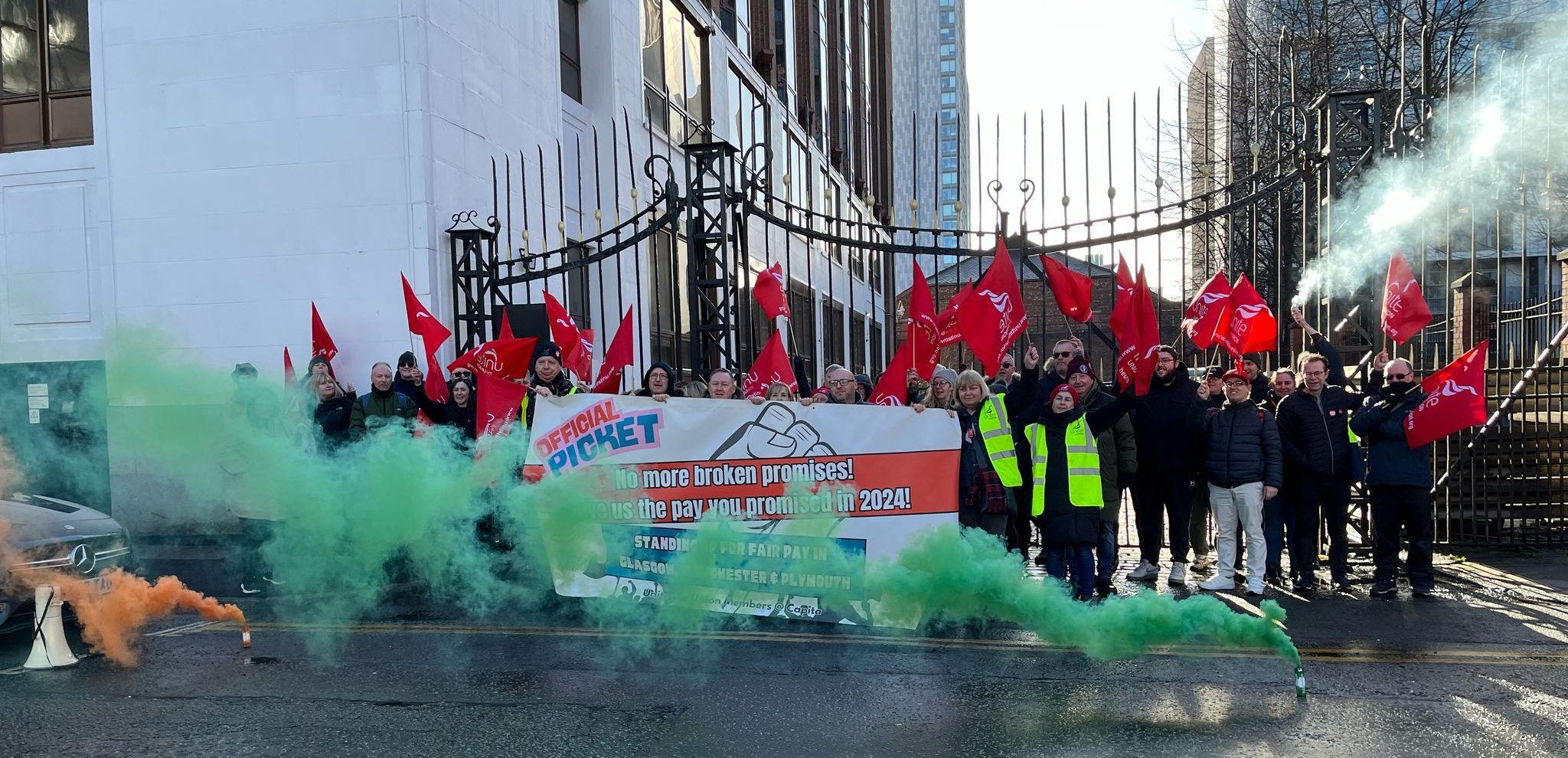
Everyone has their own circumstances and we recognise that not everyone can attend a physical solidarity rally or picket line. To ensure the highest level of accessibility and maximum participation, we often run digital picket lines. These online events bring together workers who are on strike but are unable to be physically present on the picket line. Workers are welcome to share their experience, why they have chosen to strike, laugh, joke and show support to each other.
These are actions taken that do not amount to strike action (so are not an all out withdrawal of labour) so usually do not break the terms of the employment contract. However, as with strikes, the actions are intended to add pressure and force the employer to concede a change or come back to the negotiating table. Examples include:
You have a legal right to take lawful industrial action. Unite will ensure that all legal requirements for an official and lawful industrial action ballot are met. When you take part in strike action or any other lawful industrial action, you have extra protections under the law to ensure that you do not experience detriment by exercising your right. These protections place duty on the employer not to cause detriment to workers taking part in industrial action. This includes treating workers worse than they were before the action; workers experiencing bullying or harassment, training being refused without good reason, being overlooked for promotion or development opportunities or have working hours reduced without good reason.
Generally an employer will attempt to pressure you into not striking. Once notified of industrial action by Unite, managers will often be tasked with attempting to identify whether you will be taking part in strike action. You are under no obligation to confirm or deny this.
In most cases, once it is apparent or suspected that you will be taking industrial action, the employer will write to you telling you that you are in breach of your contract of employment. For each day that you take strike action, the employer will generally not pay you, unless your contract of employment does not permit this.
The employer, usually through line managers or more senior managers if line managers are also on strike, will attempt to contact you on a strike day. When you are on strike you are under no obligation to enter into any communication whatsoever with your employer.
You cannot be detrimental, dismissed or harassed for taking legal strike action. If you feel that the employer has attempted to do this, you should speak to Unite immediately.
We often see employers relax office attendance requirements during strike days. This is intended to make it easier for workers to ‘cross the picket line’ by not having to physically walk past striking colleagues.
If you take part in strike action, your employer will generally not pay you. Unite the Union pays strike pay to every striking worker ever day of industrial action. This is part of General Secretary Sharon Graham’s commitment that no worker will be starved back to work. If you attend a picket line or solidarity rally, Unite officials will usually be in attendance to administrate the payment of strike pay.
This phrase is used often. It basically means anyone who could be striking instead turning up for work. Unite respects every individual’s decision whether to support a strike or not. Any member crossing a picket line undermines the strike and can help the employer ‘weather the storm.’ If you are being placed under pressure by management to cross a picket line, speak to Unite for advice and support.
Capita: In January 2025, Unite members at Capita voted for strike action. Workers ultimately undertook three rounds of industrial action, withdrawing their labour in a dispute over pay. The support shown to Capita members from across the finance sector and the wider trade union movement was quite simply phenomenal. Unite reps set up a fund to supplement striking workers’ strike pay (money paid by Unite to members on strike in lieu of their wages for each day they withdraw their labour) which helped ensure no striking worker was starved back to work. Donations to the fund were received from up and down the country, including many Unite at NatWest branches. As a direct result of this strike action, Capita made multiple improved pay offers, the last of which was approved by Unite members.
Diligenta: Unite members at outsourcer Diligenta took multiple rounds of industrial action in a dispute over pay. Again, solidarity was shown across the sector with donations to supplement strike pay, many people joining solidarity rallies outside Diligenta offices, and huge numbers of workers at Diligent joining Unite and standing together to force the employer to the negotiating table. Unite General Secretary Sharon Graham said, ‘By standing together Unite members have made it clear that fair pay is their basic right. During the dispute, Diligenta staff were prepared to reject pay offers that failed to address their concerns. These workers have shown incredible strength and unity.’
NatWest: During Pay 2026, Unite members at NatWest voted in two consultative ballots to reject pay offers from the bank, indicating a strong majority in favour of taking industrial action up to, and including, strike action.
Read our other guides and top tips: